Stroke remains one of the leading causes of death and long-term disability in Nigeria and across West Africa. Stroke often affects movement, speech, cognition, and overall quality of life, while placing enormous emotional and financial strain on families.
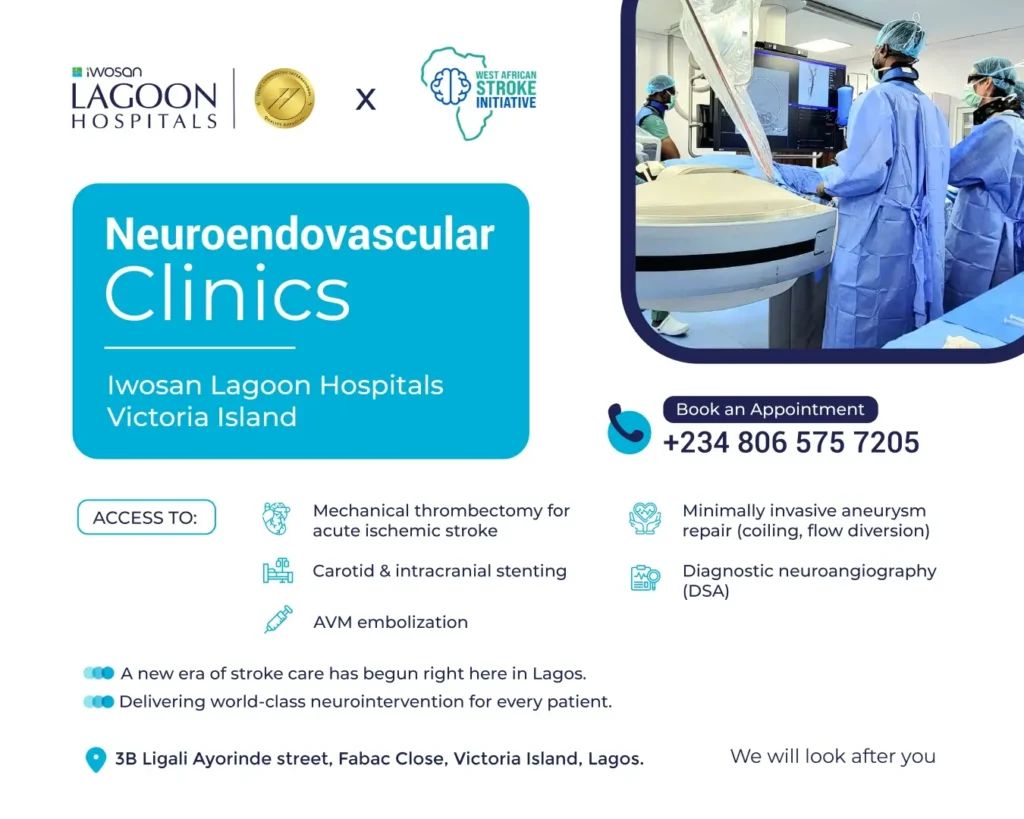
To address this growing burden, Iwosan Lagoon Hospitals has entered a strategic partnership with the West African Stroke Initiative WASI, a collaboration designed to expand access to world-class neurointerventional treatment and revolutionize stroke response in the region. The partnership marks a major milestone in Nigeria’s medical landscape, bringing advanced technologies, international expertise, and revolutionary minimally invasive procedures to a broader patient population. This article explores the significance, benefits, and expected impact of this collaboration.
Understanding the West African Stroke Initiative WASI
The West African Stroke Initiative (WASI) is an organization committed to providing comprehensive stroke care, including prevention, advanced neurointerventional treatment, and continuous medical training across West Africa. According to WASI’s official site, the initiative is positioned to become the first fully developed neurointerventional service delivery platform in Nigeria—a major advancement for a country of over 200 million people.
WASI focuses on treating complex cerebrovascular problems such as acute stroke, brain aneurysms, brain bleeds, AVMs, head trauma, and spinal vascular disorders, while promoting evidence-based, culturally tailored interventions. Additionally, WASI provides training for neurosurgeons, radiologists, and neurologists, thereby strengthening the specialized medical workforce needed to deliver these life-saving services.
Why This Collaboration Matters
- Bringing Life-Saving Stroke Treatment Closer to Nigerians Advanced stroke treatment, specifically endovascular neurointervention, is difficult to access in most parts of Nigeria. Very few hospitals have the equipment and expertise required to perform procedures such as mechanical thrombectomy, aneurysm coiling, or flow diversion. These limitations prevent many patients from receiving timely, life-saving care.
With this partnership:
- Patients can now access advanced imaging and minimally invasive treatments locally.
- Life-saving interventions that once required travel abroad can now be performed in Lagos.
- Treatment delays, which significantly worsen stroke outcomes, are drastically reduced.
- Leveraging Lagoon Hospital’s JCI Accreditation Iwosan Lagoon Hospitals holds the Joint Commission International (JCI) Gold Seal of Approval, making it the only hospital in Nigeria accredited at this level for quality and patient safety. This accreditation ensures:
- International-standard clinical protocols
- Rigorous safety measures
- High-quality infrastructure
- Evidence-based care pathways
- Introducing World-Class Neurointerventional Care Endovascular neurointervention is a minimally invasive technique where specialists navigate micro-catheters through blood vessels usually via the wrist or groin to treat brain aneurysms, strokes, and AVMs. The procedures offer major benefits:
- Smaller incisions
- Reduced surgical risk
- Faster recovery times
- Access to areas unreachable by traditional neurosurgery
Services Enabled Through the Collaboration
The partnership enables a comprehensive suite of neurointerventional services:
- Acute Stroke Intervention: Mechanical thrombectomy, the removal of blood clots from brain vessels, is now available, helping restore blood flow quickly and reduce long-term disability.
- Aneurysm Treatment: Minimally invasive procedures such as coiling and flow diversion help prevent aneurysm rupture and catastrophic brain bleeds.
- Arteriovenous Malformation (AVM) Management: Targeted embolization helps reduce bleeding risks in patients with abnormal blood vessel connections.
- Carotid & Intracranial Stenting: Used to manage narrowed arteries and protect patients at high risk of stroke.
- Diagnostic Neuroangiography (DSA): Advanced imaging offers precise mapping of the brain’s blood vessels to guide accurate diagnosis and treatment planning.
Training and Workforce Development
WASI currently leads grand rounds, workshops, and hands-on training for neurosurgeons, radiologists, and neurologists. The partnership expands these efforts by strengthening local expertise, reducing dependence on foreign medical travel, and supporting knowledge transfer from international specialists.
Conclusion
The collaboration between Iwosan Lagoon Hospitals and WASI represents a monumental step forward in Nigeria’s healthcare system. With advanced technology and internationally trained specialists, this partnership brings real hope to stroke patients and their families, ensuring world-class care is available when they need it most.
We will look after you.
Visit: Iwosan Lagoon Hospitals Victoria Island, 3B, Ligali Ayorinde, Fabac Close, Victoria Island Lagos.
References